July 20, 2026
Reiki
Introduction
We live in times when everything seems to move at a brisk, at times dizzying pace. We are constantly connected to the outside world, yet ever further from our inner one. In the daily commotion, many of us come to feel a subtle emptiness, a lack of meaning, a weariness of the soul that no amount of sleep or holiday can rest. There, in those moments of inner silence, a quiet question slips in: "Is there another way?" For many, Usui Reiki is that gentle answer, one that arrives not through noise but through stillness. It is a call to remember - to remember that within each of us there is a living source of energy, a light waiting to be discovered and discovered again. Reiki is not a religion, nor a dogma, nor an empty promise. It is a direct and profound experience, one that is felt, lived and woven into everyday life. This book was born of a sincere wish to bring more clarity and depth to this sacred art. I do not claim to hold the absolute truth; in Reiki there are no such truths. But I can share with you a vision, an experience, a path that transformed my life and taught me to see the world with different eyes. For some, Reiki is a method of deep relaxation. For others, it is a tool for physical or emotional healing. For some it is a spiritual road, a path of inner illumination. For me it is all of these and more besides: it is a coming home, into my own heart. This book is not only for Reiki therapists or practitioners. It is for anyone who senses that there is more to life than the daily rush. It is for those seeking a deeper meaning, an authentic connection with themselves, with others and with the whole. It is for the sensitive yet strong souls who know that true strength comes not from control but from openness and flow. In the pages that follow you will discover not only the foundations of Usui Reiki, but also the fascinating story of the man who rediscovered this method, Mikao Usui. Together we will explore the fundamental principles of Reiki, the sacred symbols, the process of initiation and the many ways this energy can be applied in daily life. We will also shed light on some common questions, myths and misunderstandings surrounding the practice. I do not ask you to take my word for it. On the contrary, I encourage you to be curious, to feel, to test, to trust your own experience. Reiki is a path of gentleness, patience and trust. There is no "right way" to live it, only your way: authentic, unique, sacred. May this book be a guide for you, a source of inspiration, a bridge to yourself. And above all, may it remind you of what, deep in your soul, you already know: that you are light, that you are whole, that you are connected to something infinitely greater than yourself, and that you are never alone.
Reiki - Origins and Paradigm
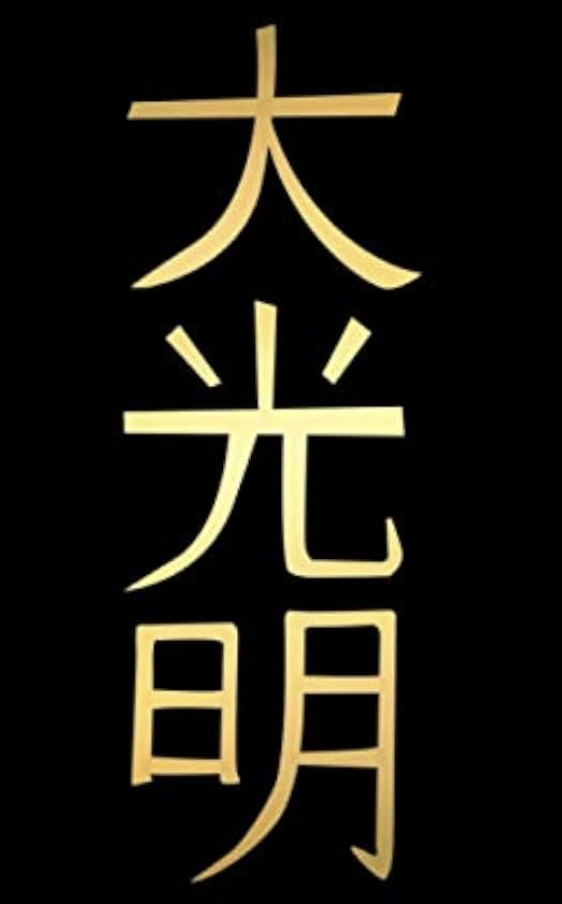
The word "Reiki" is made up of two Japanese ideograms: Rei, the universal, divine, infinite energy, and Ki, the vital, individual energy that flows through every living being. When these two energies meet consciously, a sacred space is created in which healing, harmonizing and transformation become possible. Reiki does not force, does not impose, does not manipulate. It flows exactly where it is needed, with an intelligence of its own, guided by the pure intention of the heart. This simple yet profound description sums up the essence of a system that has crossed the boundaries of culture and time. Before exploring how Reiki works in practice, it is essential to understand its origins and the paradigm it belongs to.
The origins of Reiki
Reiki is a spiritual and energetic practice rooted in Japan, and its founder is Mikao Usui, a nineteenth-century Japanese spiritual seeker. Usui had a clear vision of how to rediscover and apply a healing technique based on the transmission of universal energy. Legend has it that he received his enlightenment after a period of seclusion in the Kurama mountains, where he meditated deeply and experienced a state of expanded consciousness. After that moment of revelation he understood how to pass Reiki energy on to others, laying the foundations of a practice that would become famous throughout the world. Interestingly, the term "Reiki" was not used before Usui to name this practice, but rather to denote a universal energy flowing through all living beings. Usui thus created a healing system that drew on that energy, giving a clear framework for its application. Over the decades the practice evolved and spread from Japan to the West, where it was adapted into various forms, though its essence remained the same.
The Reiki paradigm: a path of balance and healing
Reiki is far more than a technique of physical healing. It is a paradigm, a way of seeing the world, a way of living in harmony with universal energy. At the root of this practice lies the understanding that everything in the universe is energy and that every human being is interconnected through this energetic web. The Reiki paradigm teaches us that we are all part of a whole and that our wellbeing depends on the harmony and flow of the energy within us. In the Reiki view, illness is not merely a physical problem but also a sign of energetic imbalance. Such an imbalance can arise from many causes: stress, trauma, inner conflict, negative thoughts or events from the past. In this view, Reiki supports a return to balance through a calming energy that relaxes the body and settles the mind. Within this paradigm it is not only a matter of physical healing, but of spiritual and emotional development. Reiki practitioners learn to become more aware of their own energies, to connect to the divine flow and to develop a heightened sensitivity to the energetic needs of those around them. Reiki thus becomes not merely a practice but a way of life, a continuous road of self-discovery and growth.
Energetic balance: between light and shadow
The Reiki paradigm holds that every human being is a "channel" through which universal energy flows, and that this flow is shaped by our inner state. When we are in balance, the energy flows freely and our physical and emotional health reflects that balance. When, on the other hand, we remain caught in trauma, fear or negative thoughts, tradition says the energetic flow is interrupted and we feel heavier, wearier and further from ourselves. A fundamental aspect of Reiki is the understanding that light and darkness are interdependent. Healing does not mean rejecting or ignoring the shadow, but integrating and harmonizing it with the inner light. In practice this means that Reiki works not only with what shows on the surface, but with the whole state of the person. This holistic approach allows us to see every experience as an opportunity for growth and development, not merely as a problem to be solved.
Reiki and freedom of choice
Finally, another essential principle of Reiki is respect for each person's free will. Reiki energy imposes nothing and forces no change; it only creates a space in which healing can take place. When we practice Reiki we do not control the energy, we open ourselves so that it may flow through us, guided by the pure intention of the heart. This is real freedom: the freedom to be in harmony with one's own essence and to act from a state of inner balance.
Why this book, this course?
There are moments in life when words are not enough to describe the depth of a healing process. Reiki is one of those practices which, beyond theory and teaching, is felt and is lived. I share this book not only to pass on knowledge, but to offer a testimony of the real and transforming power of Reiki. Over years of practice I have accompanied people through very hard times, and what has stayed with me are not spectacular stories but small, real changes: sleep that returns, a tension that lets go, a clarity that helps someone make a decision they had put off for months. I have also worked with people going through serious illness, always alongside their medical treatment, never in place of it. I did not treat their illness, and that is not what Reiki does. What they told me was that things felt easier: less fear, better sleep, the sense that they were not carrying it all alone. For someone in the middle of great suffering, that is no small thing. I want to be plain here, because a great deal of exaggeration is written on this subject: Reiki does not cure illness and it does not replace medicine. If anyone promises you otherwise, they are selling you something. What it can do is help you rest, settle yourself and get through what you have to get through a little more easily. But you do not need to be seriously ill to benefit from Reiki. In fact, Reiki is not only about healing; it is also a powerful tool for balance, self-knowledge and personal development. I would stress that Reiki often does not give us a "quick fix" in the classical sense of the term. Instead it helps us restore harmony within, bring peace and clarity in moments of confusion, and reconnect to our true essence. This book comes from a place of deep gratitude for the gifts Reiki has brought into my life and into the lives of those who had the courage to open themselves to this practice. It is not only a technical guide but a story of how I learned to live in harmony with divine energy, how I saw remarkable changes in people, and how, through Reiki, I found a way to help and to love deeply and authentically. This guide is dedicated to those who feel the call of this practice and to those who are open to experiencing what, for me, has become a way of life. Whether you are an experienced Reiki practitioner or just setting out, this book aims to offer you not only knowledge but also inspiration and the courage to follow your own journey of healing and self-discovery.
The life and teachings of Mikao Usui
Mikao Usui, or Usui Sensei as he is often respectfully called, is the founder of the Reiki system as we know it today. His life was an unbroken search for wisdom, for truth, and for the means by which a human being can reconnect to the divine source of life energy. Mikao Usui was born in Japan in 1865, in the village of Taniai in the Gifu region. Although the precise details of his childhood and education remain partly shrouded in mystery, it is known that from a young age he was drawn to the study of spirituality, natural medicine, philosophy and Eastern religions. He is said to have been a man thirsty for knowledge, forever seeking to understand the unseen laws of the universe and to find ways in which human suffering might be eased. In his deep wish to discover the secret of spiritual healing, Usui studied Buddhism, Taoism and traditional Eastern medicine. He even followed an academic path, trying to find answers in Western as well as Eastern philosophy. Yet what he was looking for could not be found in books alone.
Usui's spiritual journey
The turning point in Mikao Usui's life came when, feeling that the answers still escaped him, he decided to undertake an extreme practice of meditation and fasting on Mount Kurama, a sacred place near the city of Kyoto. He spent 21 days there in seclusion, devoting himself to prayer, meditation and deep introspection. According to tradition, on the last day of that intense retreat Usui had a major mystical experience: he felt a powerful light strike him on the forehead, sending him into a state of ecstasy and enlightenment. In that instant he understood how to access universal energy for healing and self-transformation. This moment of revelation marked the birth of the Reiki system.
Usui did not keep the discovery to himself. Aware of the gift he had received, he devoted the rest of his life to developing and teaching a method through which other people too could access universal energy in order to heal and transform their lives.
The teachings of Mikao Usui
The system Usui created did not focus solely on physical healing. He understood that true healing begins within and that full health can be reached only through emotional, mental and spiritual balance. To this end Usui set out five fundamental principles, known as the Gokai, meant to guide the practitioner in daily life, which we will explore in a later chapter. Alongside the moral principles, Usui developed practical techniques for channeling energy, for giving initiations (attunements) and for supporting processes of self-healing. His teaching structure was clear, with three main levels: Shoden (the basic level), Okuden (the advanced level) and Shinpiden (the Master level).
Usui's legacy
By the time of his death in 1926, Mikao Usui had trained more than 2,000 students but had initiated only 16 masters, who carried the teaching forward; today we know the names of 7 of them: Toshihiro Eguchi, Iichi Taketomi, Toyoichi Wanami, Yoshiharu Watanabe, Kozo Ogawa, Juzaburo Ushida, Chujiro Hayashi. Through their efforts Reiki began to spread, first in Japan and then throughout the world, crossing cultures, religions and eras. Mikao Usui's legacy consists not only of a healing technique but of a way of returning to oneself, to simplicity, to unconditional love and to a deep awareness of the unity of all beings. Today thousands of people, perhaps even millions, benefit from the light Mikao Usui brought into the world. When we practice Reiki we connect not only to universal energy but also to this living tradition, full of love, compassion and wisdom.
Please note
Reiki is a practice of relaxation and energetic balancing. It does not replace medical consultation, diagnosis or treatment and must not be used in their place. If you are undergoing treatment, continue with it.